
Paras Bliss understands the complexities of a woman’s body. Supported by medical experts of repute, state of the art modular operation theaters and exceptional rehabilitative staff, Paras Bliss aims at using the latest technique of short stay surgery to address your medical issues. The single/uniport , scar less surgery offers the benefit of early discharge, faster recovery , less use of medication, minimal chances of blood loss and infection. The advantages benefit the new woman of today by ensuring that you are back to your daily routine in no time.
Paras Bliss has hold of the finest and the best laparoscopic surgeons in Delhi, who strive to address all issues that can affect women of different age groups. Paras Bliss has well developed clinical protocols and surgical expertise to provide the treatment for – urinary continence, gynae-oncology, uro-gynae ailments, reconstructive surgeries, minimal invasive gynae procedures for cysts, infertility treatment along with sterilization procedures.
The Minimal Invasive Lap Gynae procedures are performed to treat the various ailments that can affect the female reproductive system. Majority of the surgeries are performed by Gynecologists and General Surgeons. The team of exceptional surgeons can perform the following procedures:
Treatment for Gynecological ailments: Abnormal bleeding, Endometriosis and pelvic pain, Gynecologic cancers (Cervical Cancer, Endometrial Cancer, Breast Cancer, Uterine Cancer, Ovarian Cancer), Ovarian Cysts, Pelvic Mass, Urinary Incontinence and laparoscopy for pregnancy.
The experts use the latest technique of single incision surgery or minimally invasive surgery giving you the benefit of:
Early discharge, Faster recovery, Lesser chances of infection, Less blood loss, Lesser use of medication
Unlike an invasive surgery requires incisions of some size which leave large wounds which can take some time to heal, Minimally Invasive Surgery is an advanced method that uses state-of-art medical technologies to minimize injury and trauma to the body.
Minimally invasive surgery is a term that refers to surgical techniques that use advanced technology to reduce damage to tissue by limiting the size of incisions thereby lessening the wound healing time, pain and risk of infection.
This type of surgery is usually performed using thin-needles, tubes, surgical instruments and an endoscope to visually guide the surgery.
The benefits of Minimally Invasive Surgery can include:
Minimally invasive surgeries not only provide comparable outcomes to the invasive ones, these surgeries offer other significant benefits as well, which include:
Minor incisions, Less scarring, Reduced blood loss, Less pain, Low risk of infection, Short stay at the hospital, Speedy recovery, Quicker return to normal activities, Comparable or lower cost
Who can be a candidate for a Minimally Invasive surgery?
Minimally invasive procedures are not suitable for everyone, and only a doctor can conclude if a minimally invasive surgery should be undertaken or not. However, these procedures produce results that are as effective as those of the traditional surgery.
While a minimally invasive surgery can benefit both adults and children, there are added benefits for the children. Children’s bodies are small and still developing; in such cases a minimally invasive procedure can provide a safer surgical experience.
Gynecologic oncology is a specialized department that deals with the cancers of the female reproductive system. The department works towards providing advanced medical and surgical treatments for patients who are suffering from malignant and precancerous conditions. These include:
Cervical cancer, Ovarian cancer, Uterine cancer, Vaginal cancer, Vulvar cancer
Cervical Cancer
This is a type of cancer that occurs in the cervix cells.
Symptoms
Vaginal bleeding after intercourse, after menopause, or between periods, Vaginal discharge, heavy or with a foul odor, Pelvic pain or pain during intercourse
Ovarian Cancer
This cancer begins in the ovaries.
Symptoms
Abdominal swelling or bloating, Feeling full quickly when eating, Weight loss, Pelvic discomfort, Changes in bowel habits, A frequent need to urinate
Uterine Cancer
This type of cancer begins in the layer of cells that form the lining of the uterus.
Symptoms
Vaginal bleeding after menopause, Bleeding between periods, Abnormal, watery or blood-tinged vaginal discharge, Pelvic pain
Vaginal Cancer
This cancer occurs in the vagina, mostly in the cells lining the surface of the vagina.
Symptoms
Unusual vaginal bleeding, Watery vaginal discharge, A vaginal lump or mass, Pain while urinating, Frequent need to urinate, Constipation, Pelvic pain
Vulvar Cancer
Vulvar cancer occurs on the outer surface of the female genitalia. It commonly forms as a lump or sore on the vulva.
Symptoms
Itching that doesn’t resolve, Pain, Tenderness, Non-menstrual bleeding, Skin changes, A lump or open sores
Infertility is a term coined, within certain parameters, to represent a woman’s inability to conceive or become pregnant. Infertility can be a result of either the parents’ medical issues that may include a range of problems caused due to unhealthy lifestyle or a medical disorder. Infertility doesn’t cause any physical symptoms but in rare cases, there may be signs like irregular menstrual cycle or hormonal disturbances. If you’ve been trying for a baby for over a year now, this is the time you should see a doctor.
Causes:
Fertility problems may relate to the woman’s, the man’s or at times both the partners’ reproduction systems. In general, the rate of infertility increases with age in both men and women. For a woman, 20s are the most fertile years in her lifetime and it starts to dip after her 30s. There are a number of reasons other than age that may cause infertility:
In men:
Low or absent sperm count, Family or personal history of prostate, testicular or sexual problems, A major medical treatment in the past like for cancer, Varicocele – small sized testicles or swollen scrotum
In women:
Higher age group of 35-40 years, Very painful or no periods for some time, A history of ovulation problems, Blocked fallopian tubes, Uterine fibroids or pelvic inflammatory disease, A major medical treatment in the past like for cancer, Had multiple- miscarriages
Treatments:
Many serious causes of infertility cannot be treated. However, those where natural pregnancy is a problem, couples can achieve a pregnancy through Assisted Reproductive Technology, which involves removing a woman’s eggs and mixing them with the sperm outside the woman’s body, to make embryos. Then these embryos are placed back in the woman’s womb for natural development. This is a common method but has a low success rate of only around 39%. Therefore, there are other alternate methods adopted:
For men:
Medication to increase sperm count and quality, Sperm retrieval in case of sperm absence, Surgical repair of varicocele
For women:
Fertility drugs to induce ovulation, Intrauterine insemination – manual placement of the sperm in a woman’s uterus, Surgical repair of fibroids or tubes


Lap-Gynae is an advanced technique to perform the surgeries. The same is associated with fewer complications – skin irritations, bladder infection. However the same can be handled by following the instructions given in the recovery plan. Other major complications that can occur are damage to the abdominal blood vessel, bladder, bowel, uterus, and other pelvic structures, nerve damage, allergic reactions, blood clots and problems urinating.
Patients opting for a Lap-Gynae Surgery are admitted usually for a maximum of two days as compared to open abdominal surgeries. Post the surgery, you are admitted and your vital signs are monitored. Before you are discharged the doctors make sure that you are fine. They advise on the slight tenderness that you may feel in your stomach. Recommendations are also given to handle the nausea. You shall be explained your medication, diet restrictions and precautions that you are to take.
The preparation for a Lap-Gynae surgery depends on the type of surgery that is to be performed. You should always tell your doctor, the kind of medication that you take- OTC and supplements. You may have to stop them before the procedure. You should always have an attendant with you for the surgery. The hospital also prepares you 3-4 days prior to the surgery. Patients are advised less gaseous diet to ensure a clean bowel. Antacids and laxatives are given to ease the patients.
Smaller incisions, no scar post operation, faster recovery, lesser chances of infection, less blood loss and less hospital stay are few of the advantages of Laparoscopic Gynae Technique. The procedure has shorter healing time than open surgeries. This technique can be used for diagnosis, treatment or both. The clinical outcomes and patient response for Lap Gyane procedures has been encouraging, hence majority of the surgeons opt for the same technique.
Earlier all surgeries were done by cutting the abdominal wall either vertically or transversely 3-5 inches depending upon the surgery and capability of surgeon. With the discovery of laparoscopic instruments, mostly all surgeries are done with small incisions made in the abdominal wall. Through this technique and with the help of an internal telescope the need of major incisions is no longer there. Through the telescope the doctor can visualize the internal anatomy and through specialized operation instruments can conduct the operation. The minimal incisions help the patient in having a no scar a7 fast recovery operation.
Laparoscopic surgery is a specialized technique to perform surgeries using minimal invasive methods. Through the same, procedures are carried out by using small instruments like Laparoscope that measure – 3mm to 8mm. It is a small telescope that is introduced in the abdominal cavity. The size the incisions are miniscule and don’t require heavy stitches. The advantages are faster recovery, no scars, less hospital stay, low cost, less blood loss, lesser chances of infection and at low hospital expense. This is the most advanced modern method of treatment. Through these procedures common gynecology issues that require operations can be treated – hysterectomy (removal of the uterus), removal of the ovaries, removal of fibroids, cysts, blocking blood flow to fibroids, etc.
Has excellent experience and home like stay. Very cooperative staff nurses. Everyone including doctors, sisters & housekeeping staff provides their precious services. Unforgettable moments of my life. Special thanks to Dr. Ruchi, Dr. Sonia, Kritika, Rekha, Pooja & Monica. Thanks for giving Gem of my life.
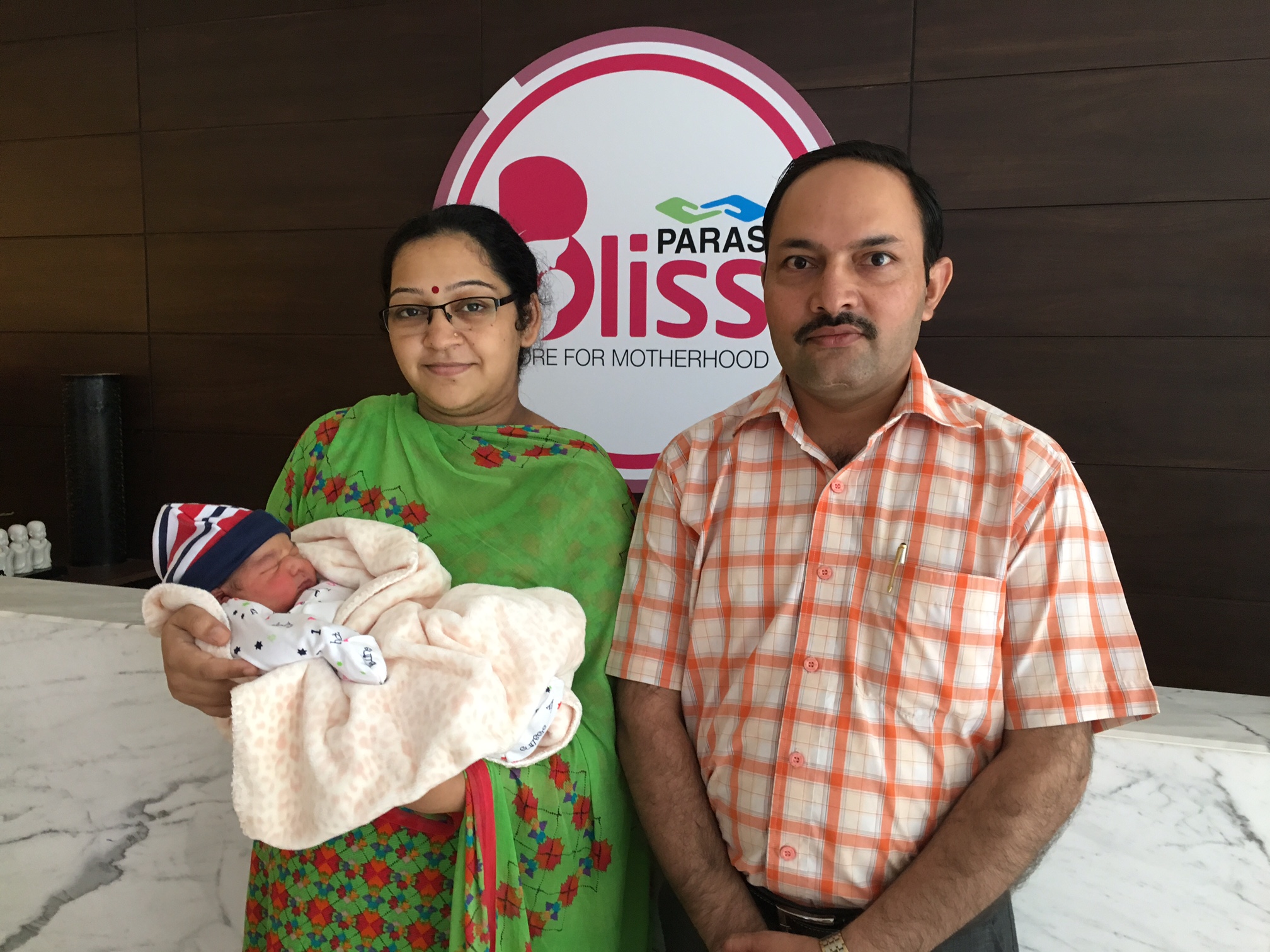
I am very impressed with all the facilities given by the hospital. All the doctors, nursing staff and housekeeping is also good. I would recommend this to my other family members.
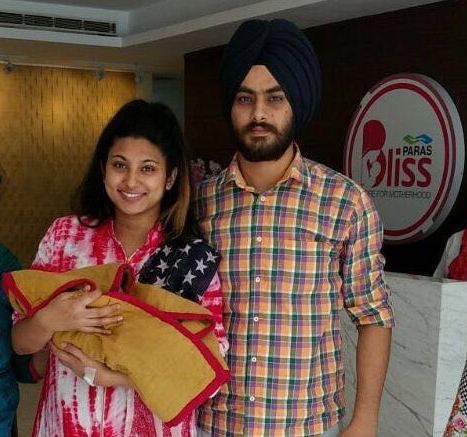
Overall I am pleased with the services. Appreciate the efforts and dedication of overall staff. Would like to highlight certain names below for their exceptional services towards the patient, relatives and the infant.
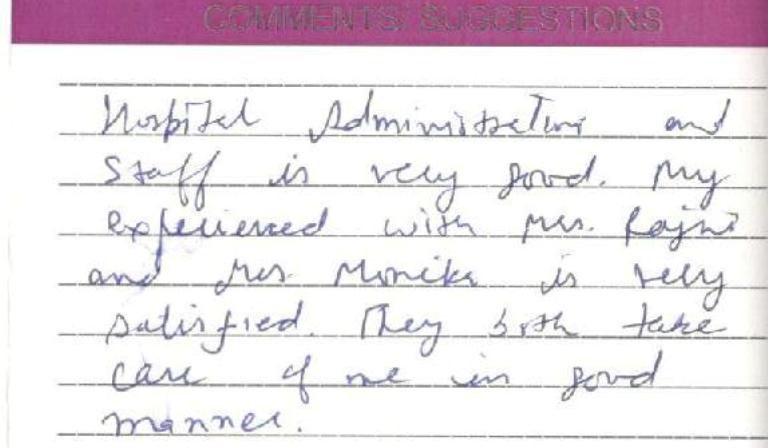
Hospital administrator and staff is very good. My experience with Miss Rajni and Ms. Monica is very satisfied. They both take care of me in good manner.
Nurses and staff is very co-operative and adjustable and caring. Doctors are very caring and concerned and track patients with all smiles. Overall experience is awesome and very good.
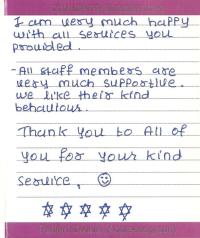
I am very much happy with all services you provided. All staff members are very much supportive. We like their kind behaviour. Thank you to all of you for your kind service.
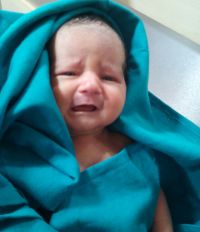
Just wanna say, big thanks to each and everyone, doctors and their staff. Brought my baby here in a worse condition, but they made us feel so comfortable and such a polite behavior. Treated the kid, like their own child. Thanks each and everyone.
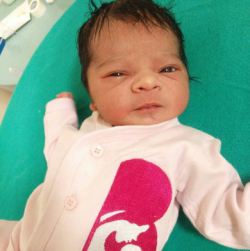
Over all experience in the hospital before, during and after delivery was great. Staff has cooperated very well. Right from nurses to housekeeping behaviour was great and they treated the mother and child like family. Last but not least infact above all “hat’s off to Dr. Shilva” and special thanks to Dr. Krishan and all doctors involved in the process.
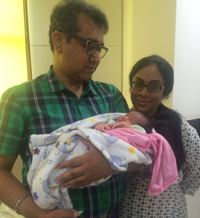
Dear Team Paras Bliss, We don’t have words to express our gratitude but thanks a ton for making one of the most precious moments of our lives so beautiful and memorable.
-Lots of love, Dr. Awnindra, Dr Beena and Omisha”
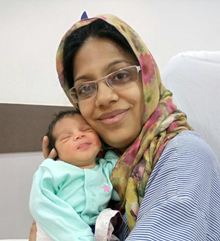
Dear Team Paras Bliss, Thank you for a blissful experience. God Bless.
-Inderjeet, Gaganpreet and Ranbir”
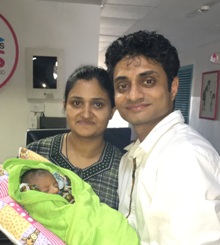
Thanks to Paras Bliss, Panchkula for giving us excellent services. Special Thanks to Dr. Shilva for special care and personal focus. At last Thanks to all nurses staff, housekeeping, canteen services persons and all who were involved directly or indirectly to support us.
Neat and clean hospital with satisfactory treatment for my patient and baby. I really appreciate team of doctors, anesthetists, support teams and other related people for tackling critical case of my wife. Highly recommended if you are looking for better and high quality services for your baby and wife.
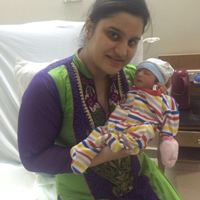
Experience with everyone in the hospital was awesome. I want to convey my best wishes and thanks to everyone involved (Staff), for making it a lifetime experience. Having a baby itself is an experience for life but, the kind of support and care I got from hospital was exceptional!
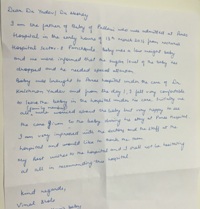
My baby was a low weight & needed special attention so baby was brought to Paras Bliss Hospital under the care of Dr. Krishan Yadav and from the day I felt comfortable to leave the baby in hospital under his care. Initially my family members worried about the baby but very happy to see the care given to baby during his stay at Paras Bliss Hospital.
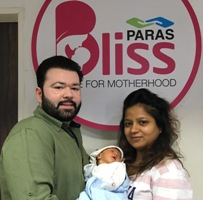
Hospital is clean and staff behaviour is excellent. Nursing staff is highly cooperative. Doctors , Hospital Facilities in the hospital are exceptional.
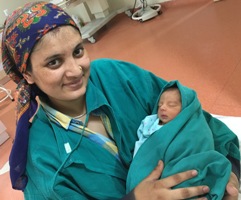
Facilities in the hospital are really good. The hospital had excellent cleanliness. We are grateful to the doctors and staff for the constant support and information given to us time to time. This hospital has fulfilled our expectations to the fullest.
“We are really happy with the care we have received. It was just a home away from home.”
Thank you PARAS for such an exceptional experience and genuine care!
I came here in an emergency. The hospital staff was quiet helpful. All the nurses especially Ms. Ritu, (OT nurse) helped me to settle down. Everything went fine. I am totally satisfied by the services. Glad I choose Paras Bliss. Thanks for the help and support.
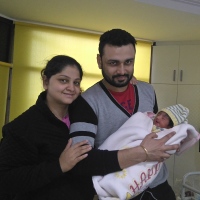
We were fortunate to have our baby delivered at Paras Bliss, New Delhi. The entire process was seamless and we met with thorough professionals, who tend to us with utmost warmth and care. The staff went out of the way to make our stay comfortable. The staff was methodical in the approach and I wish them good luck for future.
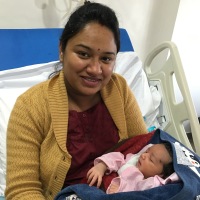
Really nice & favourable environment in this wonderful institute. The best guidance was provided to me by the labour room staff. The training given during the antenatal class also proved to be of great help. Thanks to all.

My experience with Paras Bliss is fabulous. Everything is so perfect and excellent. The entire staff is so supportive. Doctors are really excellent here. I would like to recommend Paras Bliss to everyone.
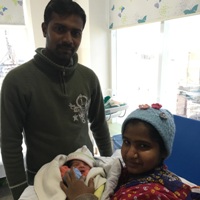
Paras Bliss made my journey of motherhood a joyful. I appreciate the care and concern showed by doctors and nurses. I really treasure the overall services that are provided by hospital that has made my experience wonderful.

We like the facility given by the Paras Bliss Hospital and I like all the staff so much but one of the best staff member who was very supporting and very hard working as per my point of view is Vandana as she is very caring lady.

Doctors and staff are very cooperative and helpful

Outstanding services and hospitality. Dr Manoj Sharma has given a very good medical reference and treatment . We are very satisfied with overall performance.